When consumers ask what type of wig looks most natural, the quick answer is that a 100% hand-tied human hair wig featuring a lace front and a monofilament or silk top provides the ultimate realism. Determining which type of wig looks the most natural depends heavily on evaluating both the hair material itself and the foundation it is built upon. In any comprehensive wig construction comparison, features that mimic natural hair growth directly from the scalp and provide a seamless hairline are the defining characteristics of a truly natural wig type.
Lace front wigs
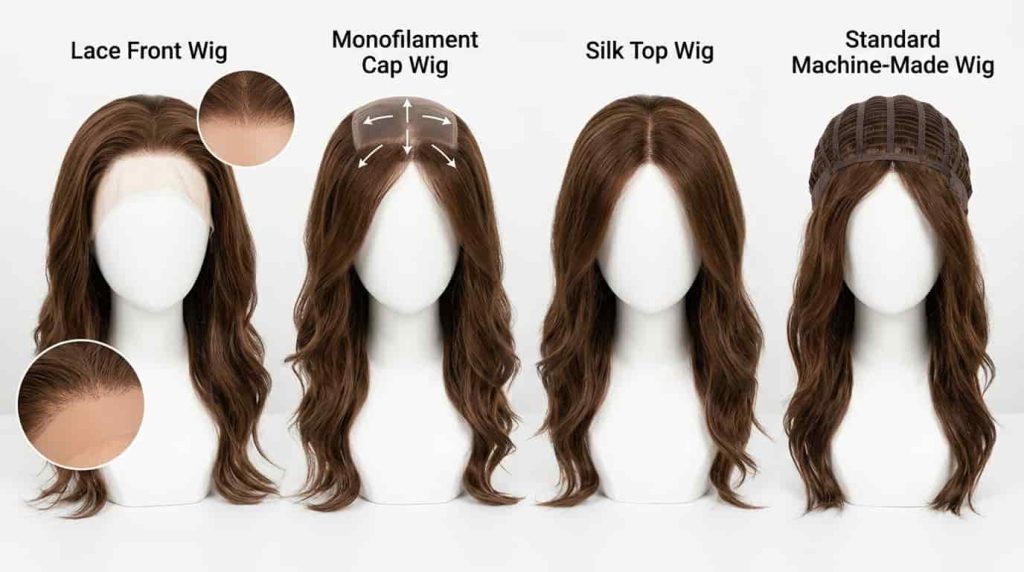
A lace front wig is widely considered a top contender for the most natural appearance. The front edge of these wigs is constructed from a very fine, sheer nylon lace material that blends seamlessly with the wearer’s skin. Individual hair strands are finely hand-knotted onto this lace base one by one, which creates the illusion of hair growing directly from the scalp. Because this design mimics a natural hairline so effectively, wearers can confidently pull their hair back away from their face without revealing the wig’s edge.
Monofilament wigs
Monofilament caps are another crucial element for realism. These caps feature a sheer, breathable mesh where each hair is individually hand-tied. This specialized construction allows for multi-directional parting, providing the exact appearance of natural hair growth no matter where you decide to part the hair. Whether it is a double monofilament cap or a single monofilament combined with a 100% hand-tied stretch section, this design eliminates the bulky, unnatural crown often seen in cheaper machine-made wigs.
Silk top wigs
Often referred to in premium designs as a “French drawn top” featuring a silk bottom layer or “glass silk,” a silk top wig offers an incredibly authentic-looking scalp. In this construction, the hair knots are cleverly hidden between layers of sheer material and silk. When you look down at the parting of a silk top wig, there are no visible knots; it looks exactly like a natural human scalp, providing an unmatched level of realism from a top-down view.
Human hair vs synthetic realism
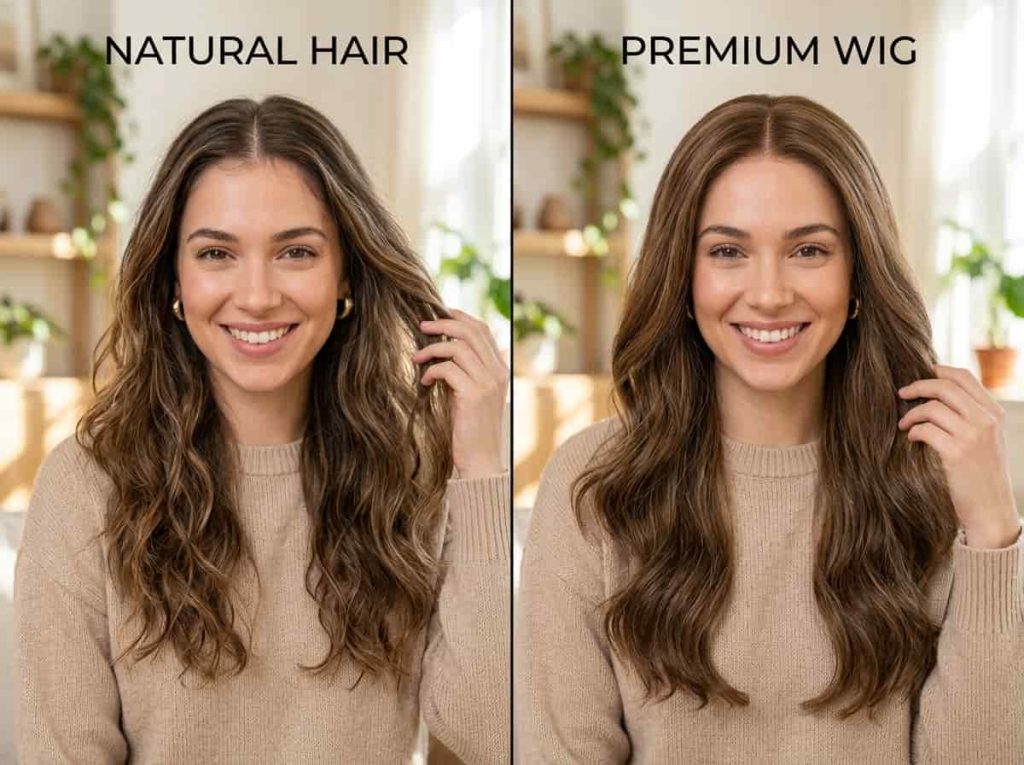
The choice of fiber dictates how the wig moves, feels, and catches the light. Human hair wigs offer a more realistic appearance, greater durability, and the same styling flexibility as your natural hair. Because it is 100% natural, it moves fluidly and lacks the artificial shine common in lower-end wigs. Premium human hair, especially Remy or virgin hair with intact cuticles, seamlessly blends with natural locks and provides a voluminous, youthful appearance.
On the other hand, synthetic hair has improved significantly. Top-of-the-line synthetic fibers can possess a natural, lustrous look and feel. However, standard synthetic hair can sometimes be so exceptionally shiny that it fails to look entirely natural. While synthetic wigs are excellent for retaining their pre-set style even after washing, the most natural-looking synthetic pieces tend to be the more expensive ones.
Best choice by need
Choosing the best option requires balancing your specific needs:
- For the absolute most natural look and styling versatility: Opt for a 100% hand-tied, virgin European human hair wig with a lace front. European hair is top of the line, offering fine texture and a highly natural bounce.
- For complete hair loss requiring a flawless base: Consider an “Evolution” cap or a custom polyurethane foundation. These caps use double layer Swiss lace and silicone perimeters to provide a secure “grip” to the natural skin without the need for adhesives, mimicking natural growth perfectly.
- For a natural look on a budget with low maintenance: A high-quality synthetic lace front wig is ideal. It offers a natural hairline and requires minimal daily styling, though it generally cannot be heat-styled like human hair.
FAQ
Can I part my wig anywhere?
Yes, if you choose the right cap construction. Wigs that feature a monofilament top or are 100% hand-tied allow for multi-directional parting. This means you can part the hair on the left, right, or center, and it will still give the appearance of complete natural hair growth.
How long do the most natural wigs last?
The lifespan of a wig largely depends on its material and how well it is maintained. Highly realistic human hair wigs are extremely durable and can last 3 to 4 years if cared for meticulously. Conversely, while synthetic wigs can look natural, they generally have a shorter lifespan of about 3 to 6 months of regular use.